The Adaptive Walk™
How to Shift State, Expand Perspective, and Become More Adaptable
Free live webinar with John Todor, P.h.D.
Monday, September 23, 2026
1:00 pm PDT
Online • Registration required
Sometimes the answer is not to think harder.
It is to change the state from which you are thinking.
Most of us know what it feels like to become stuck.
Our thinking narrows. We replay the same conversation, rehearse the same problem, and search for answers inside assumptions we can no longer see.
Taking a walk can help—but not all walking is the same.
Many people walk while remaining mentally trapped in the problem they hoped to escape. Their feet move, but their gaze, attention, and nervous system remain organized around contraction.
This is a Pensive Walk.
The Adaptive Walk™ is deliberately different.
It brings together biomechanics, reciprocal movement, gaze, sensory awareness, and attention to help change the bodily and perceptual conditions from which you meet the world.
The immediate experience can be greater openness.
The larger purpose is greater adaptive capacity.
The manuscript explains why.
The webinar shows you how.
In The Adaptive Walk™: Restoring the Body’s Role in Adaptive Thinking, John Todor, Ph.D. explains why modern life conditions the body and nervous system toward contraction—and why simply deciding to think differently is often not enough.
This live webinar turns those principles into an accessible practice.
You will learn how The Adaptive Walk™ differs from an ordinary walk and how changing the way you move, see, sense, and direct attention can help you become more open, resourceful, and adaptable.
During this webinar, you will discover:
Why capable people become trapped in narrowed, repetitive states.
How sedentary living can influence both the way we think and the way we move.
Why calming or regulating the nervous system is important—but not the complete goal.
The difference between a Pensive Walk and an Adaptive Walk™.
How biomechanics, gaze, sensory awareness, and attention work together to support openness.
Why practice and neuroplasticity are necessary for the new pattern to become increasingly natural.
How The Adaptive Walk™ can gradually become your walk.
John will also lead a brief demonstration of the principles. You may participate in whatever way is safe and appropriate for you. Walking is optional; standing and seated observation can also help you understand the essential contrast.
This introduction can help you recognize and experience the difference. Making the pattern habitual requires progressive practice over time.
This webinar may be especially valuable if:
You spend much of your day sitting or working at a screen.
You become caught in rumination, overthinking, or repetitive problem-solving.
You walk for exercise but do not always return feeling more open.
You want to respond more resourcefully to uncertainty and change.
You are interested in the relationship among movement, perception, vitality, and thought.
You want an embodied practice rather than another purely cognitive strategy.
The Adaptive Walk™ is particularly relevant for leaders, professionals, coaches, creators, and thoughtful people whose work requires perspective and adaptability.
Walking provides exercise. The Adaptive Walk™ offers something more.
The Adaptive Walk™ does not promise an answer or insight on demand.
It changes something more foundational: the state from which you encounter a situation.
When the body becomes less contracted, the gaze becomes more open, and attention reconnects with the surrounding world, more information and possibilities may become available.
At first, The Adaptive Walk™ is a method you learn.
With repetition, it can become a pattern your body increasingly knows.
About John Todor, Ph.D.
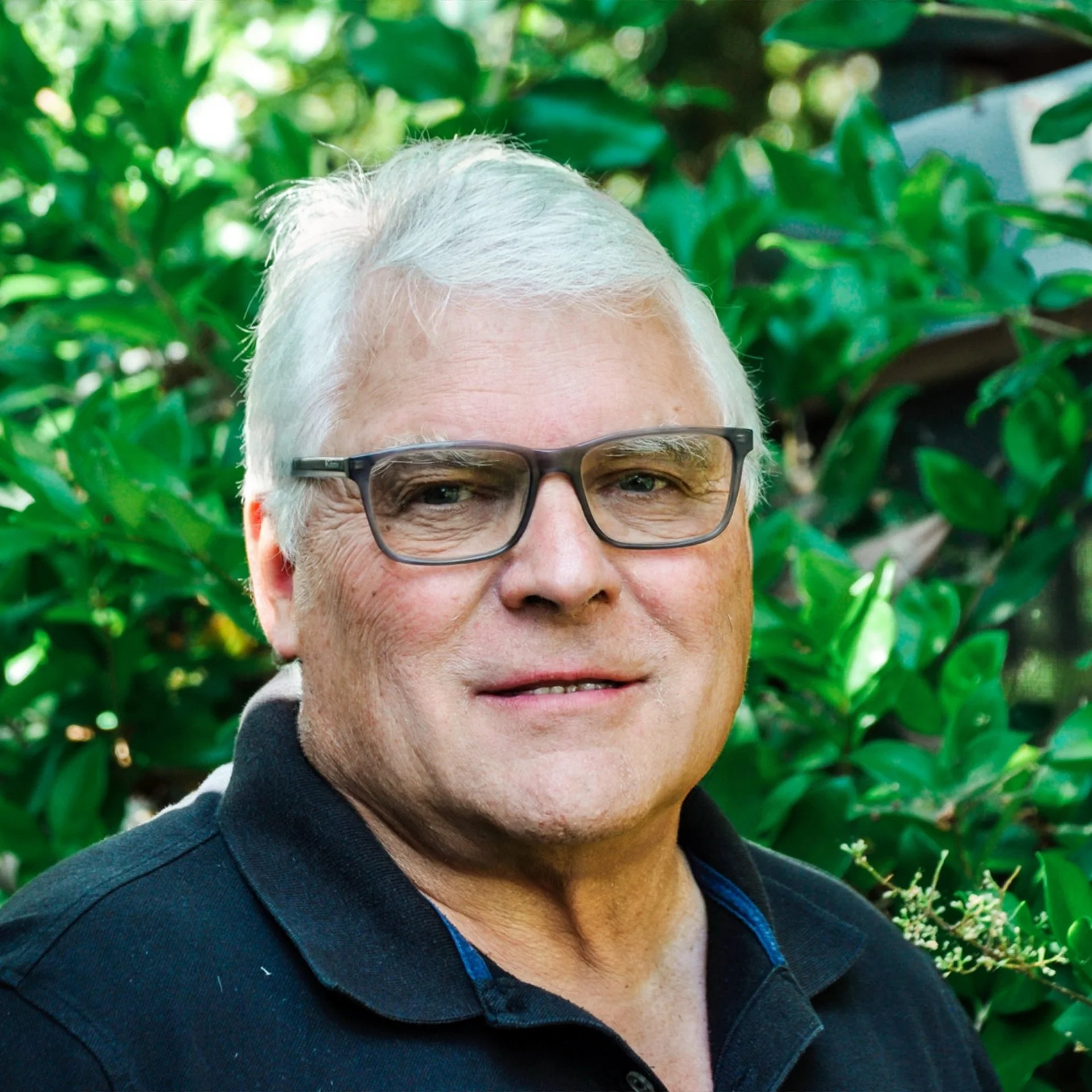
John Todor, Ph.D. is the creator of The Adaptive Walk™ and the Resilient Brain Framework. His work explores how movement, attention, perception, and neuroplasticity can help people become more open, vital, and adaptable.
Dr. John Todor has spent decades exploring a central question: why do some people adapt and thrive in times of change while others become overwhelmed, rigid, or stuck?
Drawing from academic work in neuropsychology and human development at the University of Michigan and the University of California, Berkeley, Dr. Todor went on to work extensively in innovation, market development, and organizational change. During worldwide consulting work for Hewlett-Packard and other organizations, he focused on helping leaders recognize and respond to the opportunities created by rapidly advancing technologies and disruptive change.
Today, his work focuses on two connected initiatives. Everyday Ways to Vitality translates neuroscience into practical daily actions that strengthen energy, resilience, openness, and mental flexibility. His growing YouTube channel shares short, accessible practices that help people build vitality in everyday life. His broader framework, The Resilient Brain Program, is designed to strengthen the neural infrastructure that supports adaptive flexibility,
Reserve your place
The Adaptive Walk™
How to Shift State, Expand Perspective, and Become More Adaptable
Monday, September 21, 2026
1:00 PDT
Online • Free registration
The Adaptive Walk™ is a trademark of John Todor, LLC.
This webinar is educational and experiential. It is not medical advice or a substitute for medical care, physical therapy, psychotherapy, or other professional treatment. Participate only in ways that are safe and appropriate for you.